NASA · SETI · FDL.AI · U.S. DOE
{{ t.heroSub }}
{{ t.heroBio }}
{{ p.body }}
{{ t.jP1 }}
{{ t.jP3 }}
{{ t.jPullLink }} ↗{{ t.jPull1Pre }}{{ t.jPullName }}{{ t.jPull1Post }}
{{ t.jPull2 }}
{{ t.jPull3 }}
{{ t.jPull4 }}
{{ t.jP4 }}
“{{ t.aph1 }}”
{{ t.jP5 }}
“{{ t.aph2 }}”
{{ t.jDoer }}
{{ t.jClose }}
“{{ t.mission }}”
{{ t.personalText }}
{{ t.recognitionTitle }}
{{ t.sectorsLead }}
{{ sec.d }}
{{ t.venturesIntro }}
What has always driven me is building what doesn’t exist yet — semantic search in 1996, Angie, France’s first large-scale conversational AI, in 2012, and the agentic systems of today.
A former math teacher and sociologist of NLP, I believe in a connected world where universal access to information and knowledge frees people to reach their full potential. Since 1996 I’ve worked on data pipelines and orchestrators at scale, unsupervised ML, deep learning for NLP, spoken dialogue systems, conversational platforms, Emotional AI and Multimodal AI.
Bring what was reserved for the few — intelligence, knowledge, tools — to everyone. Through open source, teaching and non-profit work — so that democratizing happens in practice, not just in words.
Hide the complexity behind the simplest gesture there is: talking to the machine. Technology should adapt to people — never the other way around.
Ship systems that run in the real world, with my own hands — then turn what worked into a method others can learn and repeat.
I was eight when it began — though I had no words for it yet. My father, a CFO, would go to the office on weekends to deploy AS/400 systems, and I tagged along. I watched the terminals, the quiet discipline of machines that simply had to work because people and businesses depended on them. What I took from him wasn’t only a fascination with technology — it was resourcefulness: figuring things out, repairing, adapting, and never standing still, even when the path wasn’t obvious.
Very early, I felt computers were powerful but built the wrong way around. We had to type, click, search — to bend ourselves to the machine. I wanted the opposite: machines that understand us, starting with the most human interface we have — language. As a child, I was captivated by Ulysses 31, where the ship’s computer spoke with its crew. That talking machine planted a seed that never left me — and set me on the path to dialogue systems. The principle has never changed since: hide the complexity behind the simplest gesture there is — talking to the machine.
For close to seventeen years, I carried that vision almost alone. People around me said it wouldn’t work — the technology wasn’t ready, the market wasn’t ready, the world wasn’t interested. I wasn’t waiting for AI to become fashionable. I kept building toward something I was certain had to exist.
Watch the moment ↗2012. Microsoft Days, Paris — the third day, dedicated to innovation and research. Three thousand people in the room, twelve thousand more online. I was there to present the work of our research lab in Lille, xBrainSoft: Angie, the assistant the press would soon call the “French Siri.” The demo was, in effect, a ChatGPT experience ten years early — a pure spoken dialogue between a human and a machine: conversation, tasks, actions. Introducing me on stage: Bernard Ourghanlian, CTO of Microsoft France and my mentor — one of the first to believe in my work on AI.
As Bernard walked on to introduce me, I ran one last check. The Wi-Fi was gone. Three thousand people had tried to connect at the same time, and nobody had planned for it. Every part of the demo ran live, over the network. Backstage, panic — I still apologize to the crew for those few minutes. I honestly thought my career in AI was ending right there. And Bernard was already calling me up. Double or nothing: either it worked, or it was over.
I walked out and asked the whole room to switch off their Wi-Fi — “imagine you’re inside a giant 747.” Three thousand people did. The connection came back. And Angie came alive: translating on command, finding the cheapest fuel nearby, and finally — unprompted — reminding me of a meeting at Bastille in thirty-five minutes. Everything worked. The room applauded.
That moment changed my life, fast. Three months later I was in Silicon Valley, opening my own research lab in dialogue systems and NLP. The rest is history.
Since then I’ve had the privilege to work with governments, global companies, universities and scientific institutions — including NASA. But the deeper lesson came later. As AI grew more powerful, I saw the risk: built in the wrong direction, it can replace more than it augments, centralize intelligence instead of sharing it, make people more dependent instead of more capable.
“AI won’t replace you. A person using AI will.”
So my work today isn’t only about building AI systems — it’s about building them in the right direction: to help people think, learn, create and decide with more dignity. Not just experts. Not just executives. Not one country or one industry. Everyone. That is why so much of what I build is open source, why I teach, and why I commit to non-profit work: democratizing has to happen in how AI is built and shared — not just in how we talk about it.
“If AI is rewriting the rules of productivity, we must rewrite our relationship with work itself.”
Through all of it, I never left the keyboard. I could have become a manager and moved into pure strategy; instead, I chose to keep building. I’m convinced you only truly understand AI by making it work under real constraints, with your own hands — and that’s exactly where my method comes from: not theory, but thousands of hours shipping systems that had to run in the real world. I’m an architect who still builds.
The best technology isn’t the one that replaces us. It’s the one that helps more people become capable.
“My mission is to positively impact more than one billion people — focusing on applied AI for good.”
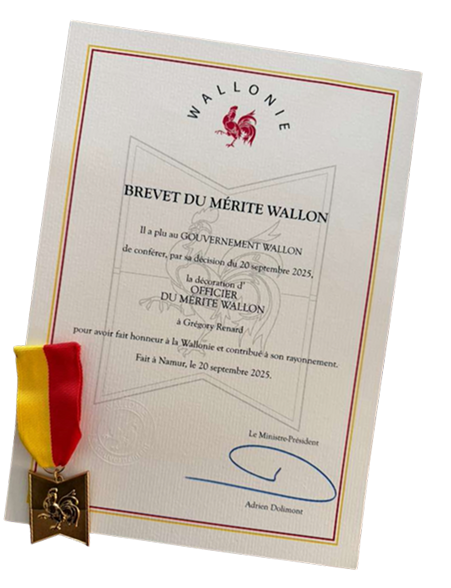
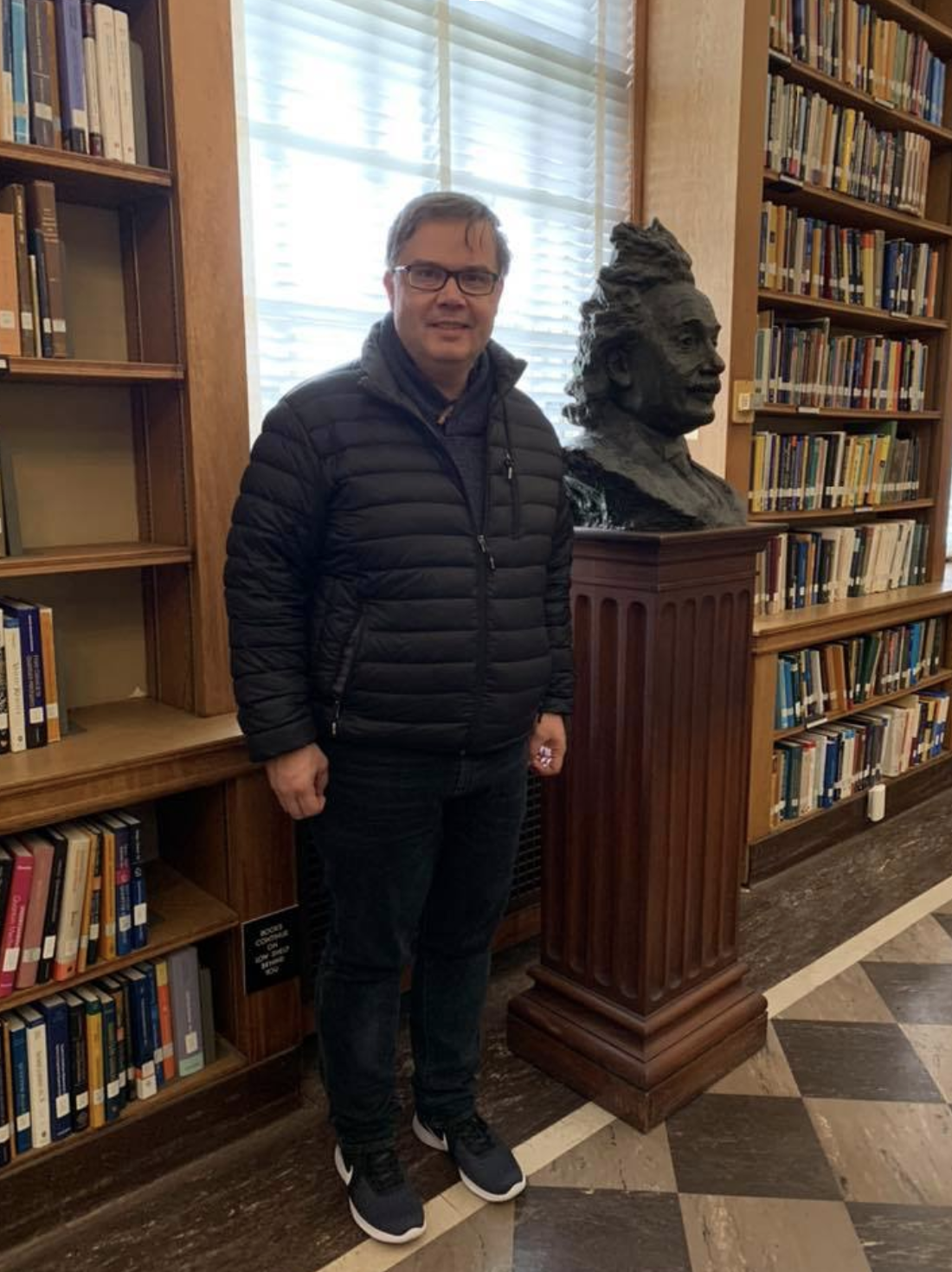
Beyond the work: I’m a former math teacher, and I served five years as a volunteer firefighter. It started with a National Decoration for merit — awarded after I helped save people from a deadly fire; that moment is what led me to train at fire school and serve. A second National Decoration later recognized my work on ethical AI. I’ve also been a Guest AI Expert at the Institute for Advanced Study in Princeton — once home to Einstein, Gödel and Oppenheimer — invited for my fine-grained understanding of bias in language models.
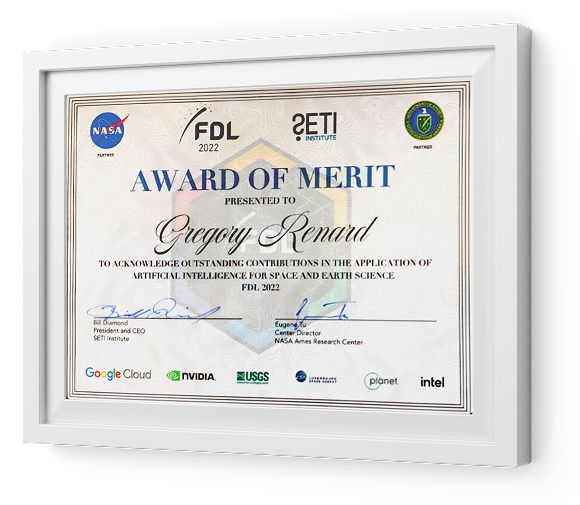
It started with language. For more than 30 years I’ve built real-world AI — conversational AI, knowledge graphs, NLP, LLMs and agentic architectures. In 2012 I launched Angie — the “French Siri”, France’s first large-scale conversational platform (Techdays 2012). Since then I’ve advised governments and Fortune 500 companies, and shared the work on stage at TEDx, MIT, the Institute for Advanced Study, Stanford and Berkeley — with 50+ publications and patents and NASA’s 2022 Merit Award along the way.
First NLP architecture for call centers in the North of France — semantic search.
Co-founder of the French Developers Community — 3M+ members.
Industrialization of dynamic websites and web apps.
Launched a first Personal Digital Assistant industrialization platform (Watson demo — RTBF).
Oscaro.com — interconnected stockless supply chain supporting €300M+/year revenue.
Next-generation agentic workflows with Bright.AI, Docugami and Renault Group — operationalizing the essay & method. In 2025, built SRL4Children, an open-source agentic framework for Everyone.AI.
Models to infer human values and structure customer reviews 100× faster (Cerebra.ai); supported $50M+ fundraising across Plato, ZeroSystem and Cerebra.AI.
Satisfaction.AI at scale; AI for Humanity (France); European Commission AI Strategy; NASA.AI Technical Committee; IAS Princeton AI & Ethics guest.
Founded the Everyone.AI community; France AI & CNNum advisor; IronCar competition (ironcar.org).
Customer-service augmentation platform for email, chatbots and phone with Satisfaction.AI.
People2Vec.org project — learning human representations from language.
Car personal digital assistant platform for major car manufacturers.
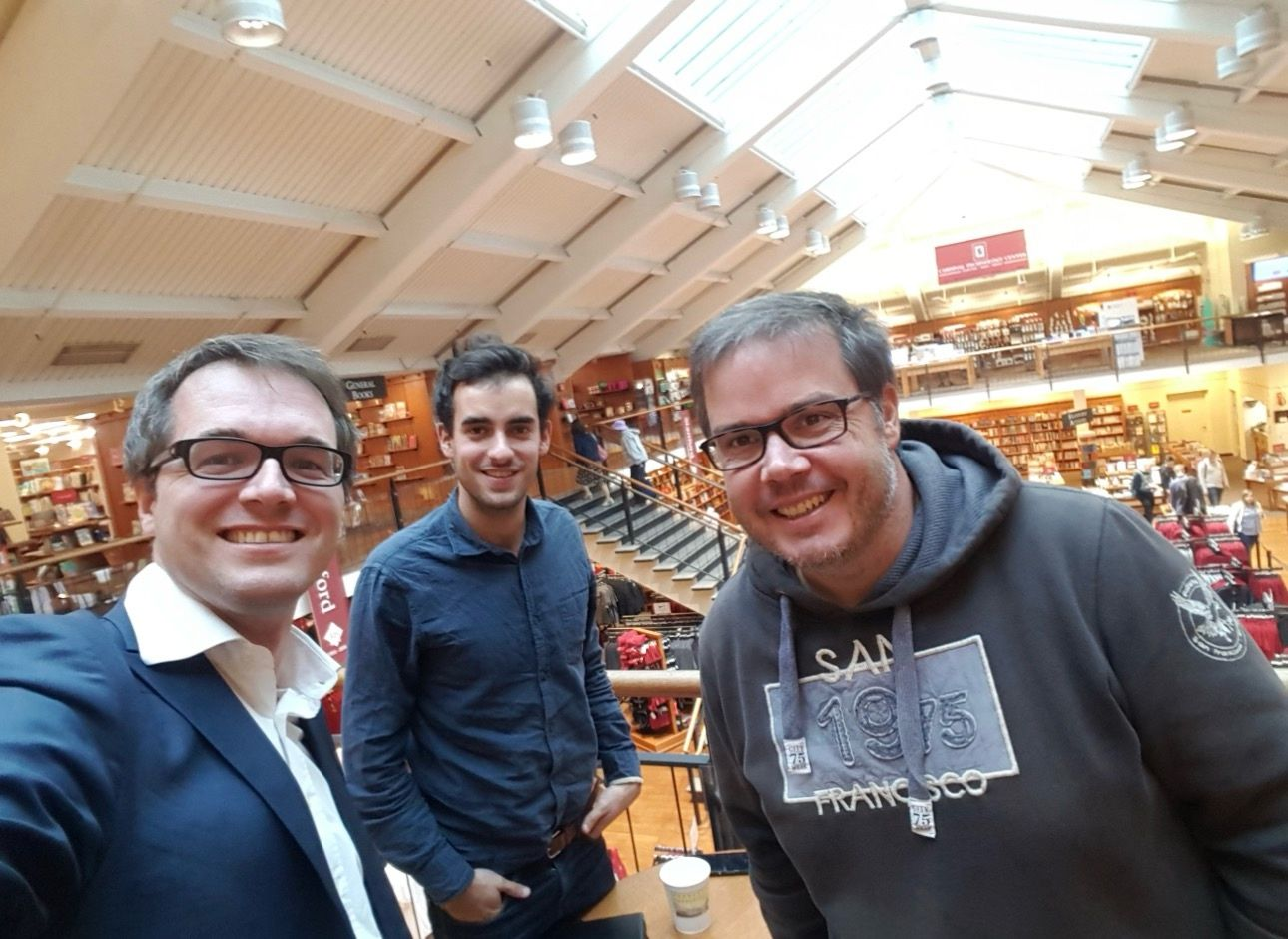
My impact on public policy is just as concrete. Back in October 2016 — over a coffee at Stanford with François Levin and Yann Bonnet — a sincere conversation set an idea in motion that would grow into a national ambition. I went on to become one of the three co-initiators of AI4Humanity (2018) and a contributor to the France IA strategy (2017) and the Villani report (2018) — the work that anchored France and Europe’s AI strategy, with implications for hundreds of millions of citizens. I also served as a reserve member of the EU High-Level Expert Group on AI, and co-authored the Holberton-Turing Oath, setting early ethical guard-rails for the industry.
Beyond industry, I co-founded the Sociology-NLP Research Group at UC Berkeley’s Matrix Department (2020) and teach the next generation of engineers — guest-lecturing at Stanford, the Institute for Advanced Study and UC Berkeley, and mentoring at Holberton School and 42 School. My portfolio spans a dozen issued AI patents and 200+ publications and talks — among them a Nature paper on generative AI and machine intelligence.
Invited as speaker, advisor or member of leading organizations
One common thread across two decades: production-grade applied AI that changed how these industries work — at scale and on time.
Voice platforms for humanoid robots.
Watch ↗In-car personal-assistant platforms for major manufacturers.
Watch ↗Customer-service augmentation for global banks.
Watch ↗Supply-chain AI for stockless, large-scale retail.
Award-winning space-tech with NASA FDL.
Watch ↗Applied AI & agentic systems for a global construction & infrastructure leader (Eiffage Group).
Watch ↗Embedded edge orchestration — SLMs running on-device (NPUs) for real-time physical AI (Bright.AI).
Watch ↗As co-author of the Holberton-Turing Oath — inspired by the Hippocratic Oath — Gregory is a key figure in establishing ethical standards for human-centric AI, developed and used responsibly for the benefit of humanity.
More on ethics & AI →Code-Sources developer community.
15+ sites including Oscaro.com, Alain Prost and French sport federations.
Magma Mobile game studio.
SmartUse multitouch drafting platform.
Voice & connected car with Renault-Nissan & Oscaro.
AI for Humanity strategy.
NASA.AI — FDL applied-AI research.
I currently lead or advise applied-AI vision & strategy for ventures, labs, universities and non-profits — as co-founder, advisor or business angel: